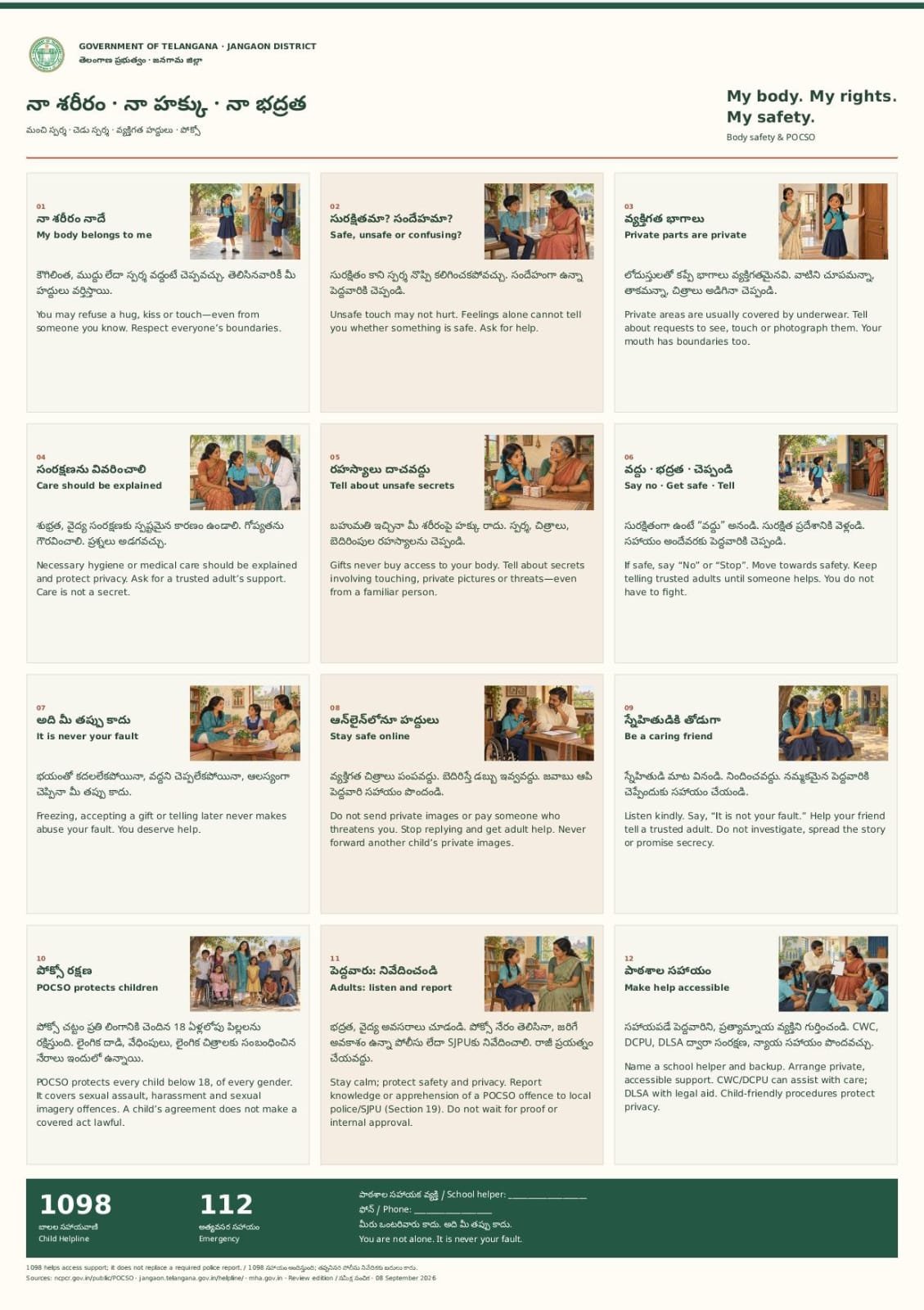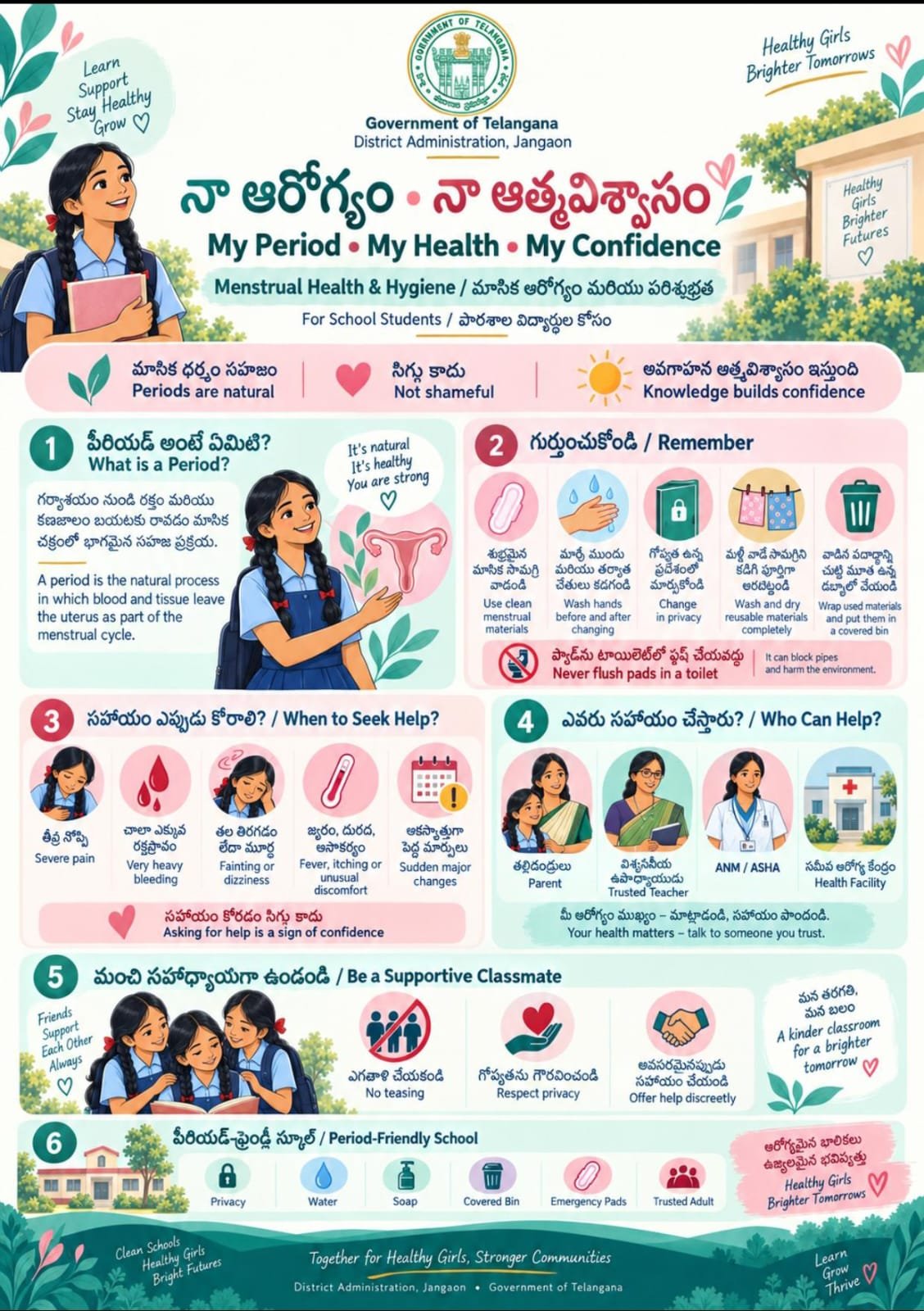

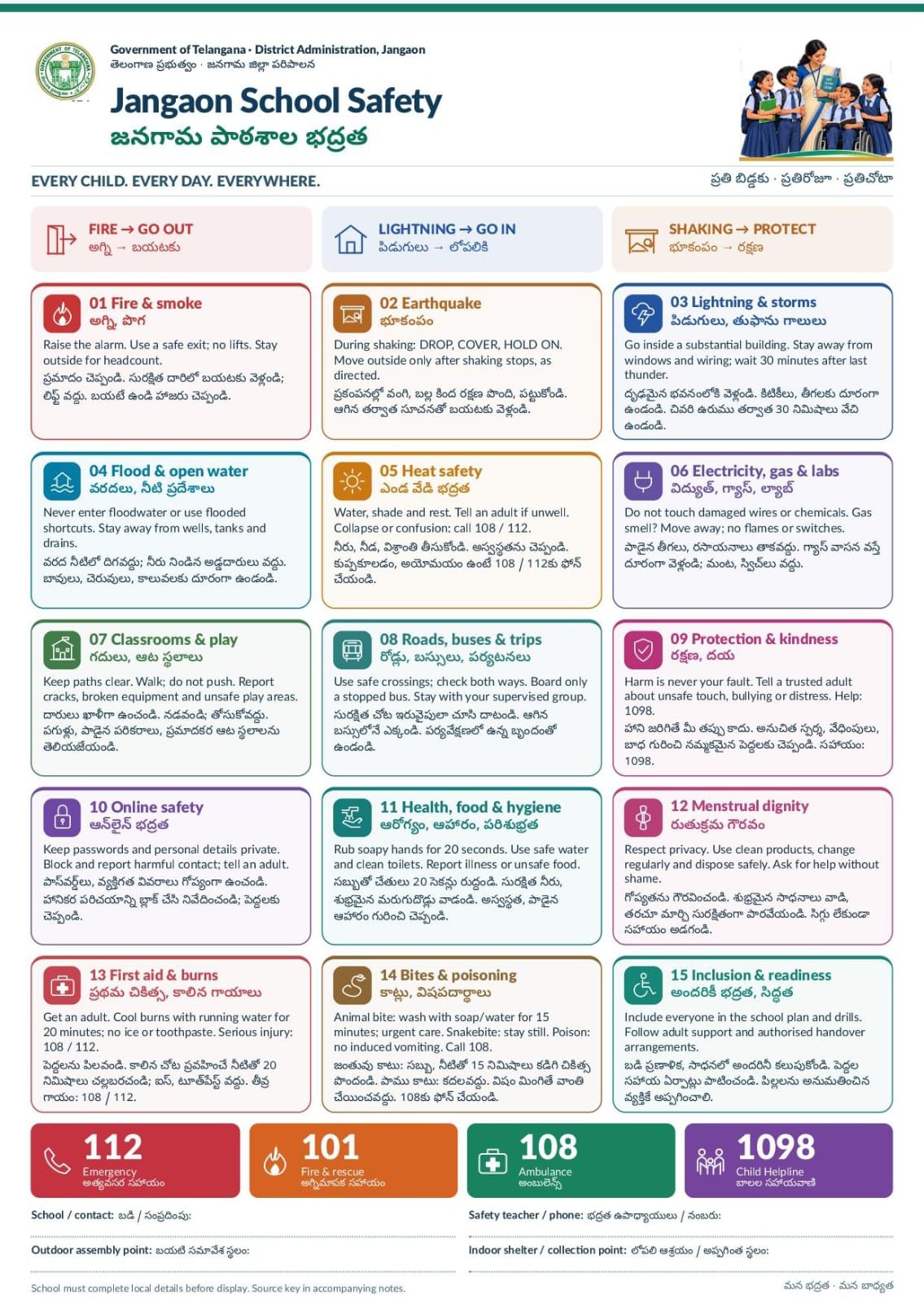
Special measures to create awareness on child safety, health and rights in government schools: District Collector Sandeep Kumar Jha ————————————————————————– *15 posters.. three types of banners provided to each government school* *District Collector Sandeep Kumar Jha Special awareness posters and banners have been provided to each government school to create awareness on monthly health-hygiene, school safety, child rights-physical safety, POCSO Act, etc. to students in government schools, *District Collector Sandeep Kumar Jha* said in a statement on Wednesday. A total of 15 posters have been provided to each government school, of which 5 posters of three types have been distributed. Similarly, it was revealed that three types of awareness banners have also been provided to each school. *My Health – My Confidence* The posters created under the title “My Period • My Health • My Confidence” convey that menstruation is a natural process and there is no need to be ashamed of it, and proper understanding builds self-confidence. They explained the importance of using clean sanitary pads, washing hands before and after changing them, disposing of used equipment safely, and not flushing pads in the toilet. They also advised parents, trusted teachers, ANM/ASHA (or) the nearest health center to seek help in case of problems like severe pain, heavy bleeding, dizziness (or) fainting, fever, itching, and discomfort. They urged students to respect their privacy and help when needed, and to create awareness to ensure that every school has period-friendly facilities. *School Safety* The school safety posters created with the message “EVERY CHILD. EVERY DAY. EVERYWHERE.” explained the precautions that students should take in emergency situations. He said that the posters also include basic safety measures such as going out in case of fire, going into a building during a thunderstorm, and taking shelter during an earthquake. The posters also include precautions to be taken during fire, earthquake, lightning-storms, floods, sun, heat, electricity-gas-lab accidents, classroom-playground safety, roads-buses-travel. Similarly, the posters were designed to create awareness among students on topics such as online safety, health-food-hygiene, menstrual respect, first aid, burns, animal bites, snake bites, poisons, and safety-preparedness for all. In case of emergency, it is suggested to use the numbers 112 – Emergency Help, 101 – Fire Rescue, 108 – Ambulance, 1098 – Children’s Helpline. *My Body – My Rights – My Safety* “My Body. My Rights. My Safety.” The posters created under the title will educate students about good touch, bad touch, personal boundaries, children’s rights, and the POCSO Act. They informed that every child has the right to their own body and has the right to refuse unwanted hugs and touches. They were advised to protect the privacy of personal parts, report suspicious (or) unsafe touches, threats, and personal images to trusted adults. They explained that they should go to a safe place with the message “No – Safety – Tell”, and keep reporting the matter to trusted adults until help arrives. They said that even if they cannot respond due to fear in an unsafe situation, or if they tell too late, it is not the child’s fault and that they should get help. They were told not to send personal images online, not to pay for threats, to block and report harmful contacts, and to seek help from adults.
He suggested. The POCSO Act, which protects every child under the age of 18, will create awareness through posters on crimes related to sexual assault, sexual harassment, and sexual images. He said that it will also create awareness on identifying a trusted person to provide help to students at the school level, alternative support person, and opportunities to get legal help. *Comprehensive awareness of student safety* These awareness posters and banners have been designed with the intention that school is a place where students should grow up safe, healthy, and confident. He suggested that these should be displayed in schools so that every student is aware of his health, safety, and rights. He clarified that messages like “Our safety – our responsibility”, “You are not alone. It is not your fault”, will create awareness among students to build safety, respect, mutual cooperation, and self-confidence.